

If you want to know how to start a cold call, begin here: the person on the other end is not judging your product yet. In the first few seconds they decide one thing, whether you are just another telemarketer. If the answer is yes, the call is over before you reach your point.
The good news is that a strong opening is mostly preparation and a few small habits, not talent. This guide walks through a four-step opener, along with the habits we see in phone-based sales at SW Ventures, so you can use it on your very next call.
Your prospect is in the middle of something when the phone rings. Within seconds they ask three silent questions: who is this, why are they calling me, and how long will this take? A robotic script answers all three badly.
Tone does much of the work here. Sales coach Jason Bay estimates that tonality is around 80% of a cold call opener, and says the most common mistake he sees is reps switching into a stiff, corporate voice the moment they dial (ZoomInfo Pipeline). A client also hears immediately whether the caller sounds monotone or enjoys the work and believes in the product.
So before any technique, speak like a person. Keep a calm pace, slightly slower than usual, and put a little weight on the important words.
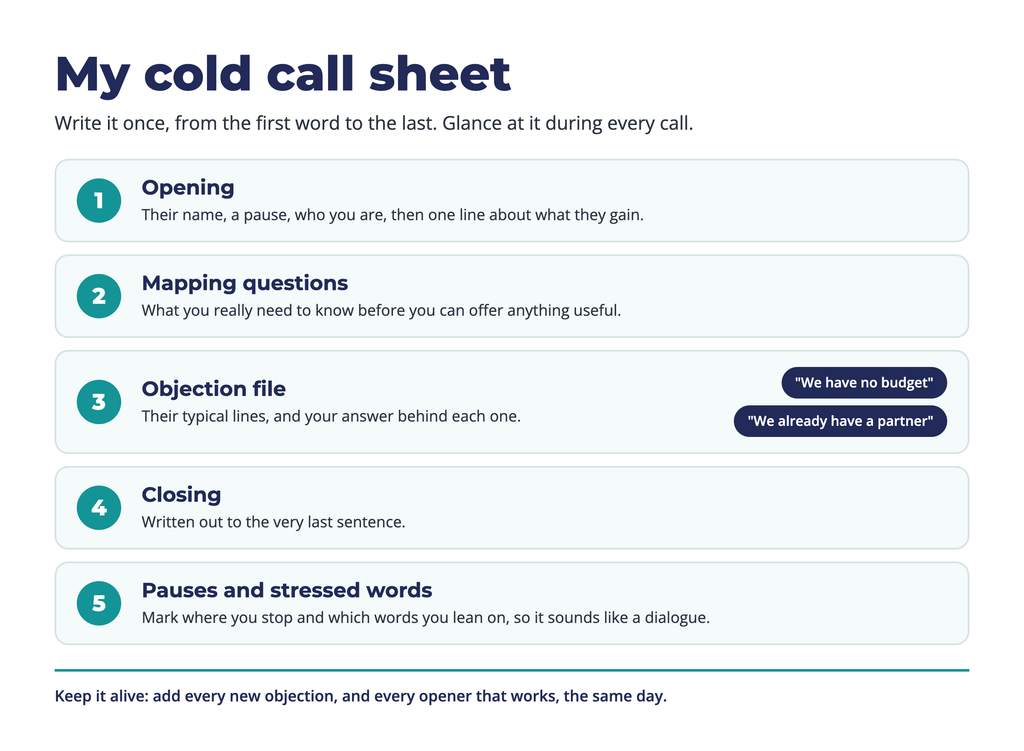
A call sheet is a professional’s toolbox, not a beginner’s crutch. Once it is written, calling feels less scary because the preparation is already done, and you can glance at it during the call. It should hold five things:
Two traps to avoid. A long monologue makes the client start typing emails. A call that is too short means you map nothing and end up guessing later.
Keep the sheet alive. When a new objection shows up or an opener works well, add it the same day. You can draft the first version with AI, but rewrite it in your own words so it sounds like you.
Start with: “Hi, am I speaking with Tarmo?” Then stop talking and wait for the answer. A name pulls attention, and the pause makes the person come to the phone. Follow with one short line: “I’m calling from [company].”
This lines up with the “two yeses” idea described by Allo: get a yes to the name, then a yes to the role, and two small agreements build momentum. One warning from Bay: do not follow the name with fake small talk like “how’s your day?”. He calls that a telemarketer giveaway.
Next ask: “Are you the person responsible for [area] in your company?” The question makes them think, which stops them from half-listening while they type, and it earns your second yes. If it is not them, you have saved time and can ask who is.
Now give a short introduction about what the client gains, not about you. An example of what not to do: “Hi, I have fish oil to offer, do you need it?” There is nothing in it for the listener, so the answer is no.
Two openers that lead with value instead:
A hook like this only works if your next sentence backs it up. Promise something you can actually deliver, and say it calmly.
This is the polite brush-off, and you can turn it into a follow-up call.
The date they name is your follow-up time. You do not have to guess when to call, and they already expect you. If you like, send a short reminder the day before.
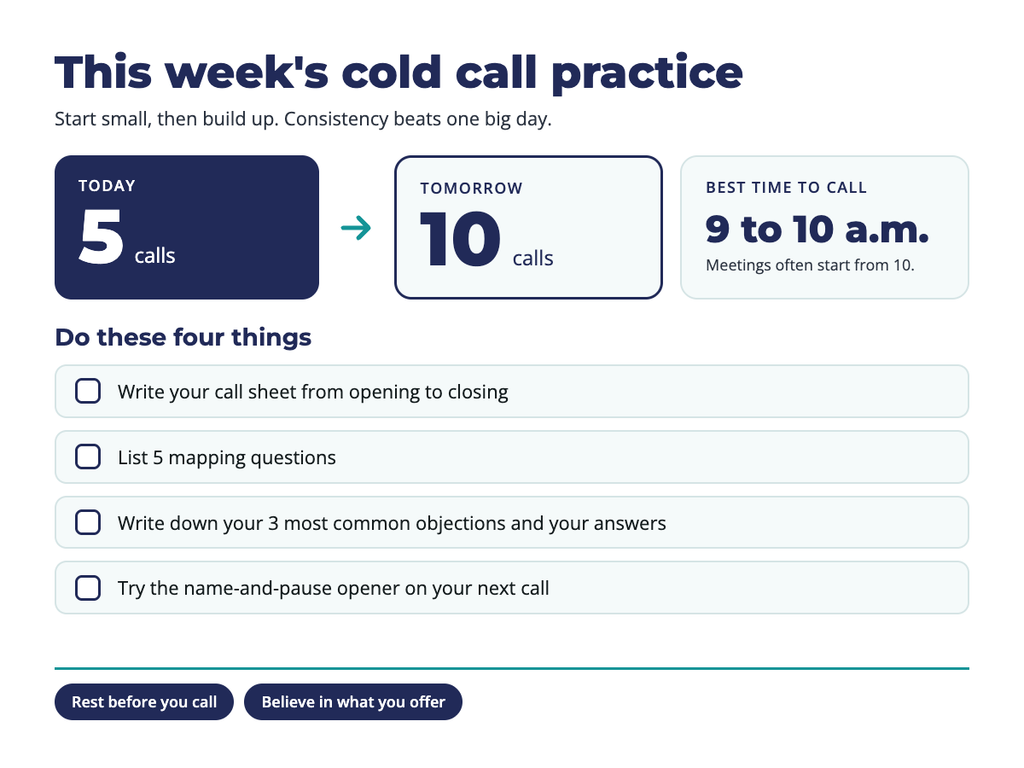
Then do these four things:
Starting a cold call well comes down to four things: prepare a call sheet, sound like a human, make sure you have the right person, and offer value before you ask for anything. Handle “just email me” with a fixed date, and keep calling until you get a clear no or a meeting.
Practising alone is slow. At SW Ventures, phone is a core channel in several divisions, including ERGO Estonia, SW Finance and Rahmqvist, and new salespeople learn with a team and a mentor. If you want to try it for real, leave your contact details and join the team.