

Rejection is part of sales. You can prepare well, ask good questions, understand the customer and genuinely believe that your solution makes sense – and still hear “no”.
That is what makes rejection difficult. Salespeople are often taught that the answer is simply to become tougher, take it less personally and move on. In reality, it is rarely that simple. When you have put effort into a conversation, rejection can be disappointing. Sometimes it makes you question what you said, whether you missed something or whether you are actually as good at sales as you thought.
The goal is not to reach a point where rejection no longer affects you at all. The more useful skill is learning how to deal with it without allowing one result to change the quality of the next conversation.
Strong salespeople eventually develop their own version of the same process: understand what happened, take the useful lesson and then move forward.
Sales gives you unusually direct feedback. You make the call, start the conversation, ask for the meeting, present the solution and eventually ask someone to make a decision. Sometimes that decision is simply not the one you hoped for.
Even when the customer is rejecting the offer rather than you personally, it can be difficult to separate the two. The thoughts come quickly: Did I say something wrong? Was I not convincing enough? Did I ask the wrong questions? Would another salesperson have closed it?
Some of that reflection is useful. Salespeople should absolutely look at their own performance and think about what they could improve. The problem starts when reviewing the conversation turns into judging yourself based on one outcome.
A lost deal tells you something about that particular situation. It does not automatically tell you that you are bad at sales.
Rejection can also feel uncomfortable for a very human reason. Research on social rejection shows that exclusion and rejection can produce a genuine experience of social pain. That does not mean a lost sale is emotionally equivalent to every other form of rejection, but it helps explain why the advice to “just stop taking it personally” is easier to give than to follow.
Before you decide what to learn from a rejection, you need to understand what kind of “no” you actually received.
A customer may decide not to move forward because the timing is wrong, the budget is not available, another option is a better fit or the issue simply is not important enough right now. In other situations, the customer may not understand the value clearly enough, may not trust the solution yet or may have been confused by the way it was presented.
Sometimes the salesperson could have handled the conversation better. Sometimes the outcome was mostly outside their control.
Those situations should not be treated the same way.
This is why one of the worst questions after losing a deal is simply: “How could I have convinced them?”
A better question is: “What actually happened here?”
That creates room for a more useful review. Maybe there is something to improve. Maybe there is nothing major to change. Both are valuable conclusions.
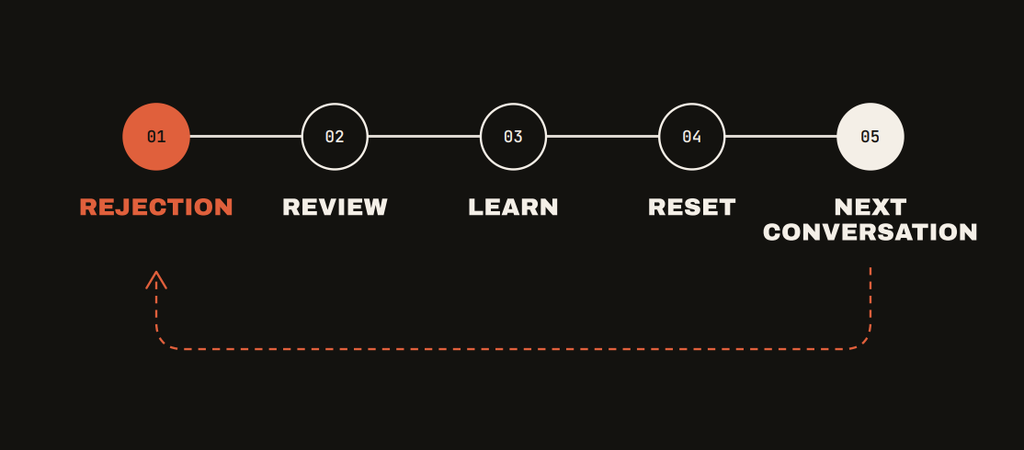
The first reaction to rejection is often emotional. You may feel disappointed, frustrated or tempted to immediately explain why the customer is making the wrong decision.
This is rarely the moment for another sales argument.
If the customer has made a clear decision, stay professional. You do not need to win the final sentence or turn every “no” into another round of objection handling. Sometimes the right thing to do is simply acknowledge the decision and leave the relationship in a good place.
This small pause also helps you. It is much easier to understand what happened once you are no longer reacting to the result itself.
Good salespeople lose deals. Experienced salespeople hear no. Well-run conversations still end without a sale.
That sounds obvious, but it becomes much harder to remember when the rejection is yours.
One useful habit is to change the question you ask yourself afterwards. Instead of asking, “What does this result say about me?”, ask, “What does this result tell me about the conversation?”
The first question makes the outcome personal. The second gives you information.
Your ability as a salesperson should be judged across patterns, conversations and repeated behaviors, not by one individual result.
Once you have some distance from the result, look at the conversation honestly.
Did you prepare properly? Did you understand what the customer actually needed? Did you ask enough questions before presenting your solution? Did you listen to the answers or spend the conversation waiting for your chance to speak? Was the offer clear? Did you understand the real objection? Did you follow up when you promised?
These are useful questions because they point toward behavior you can change.
“What could I have done differently?” is a much better question than “Why didn’t they like me?”
Sometimes you will find something obvious. Maybe you rushed. Maybe you presented too early. Maybe you did not explore an objection deeply enough. Other times, the honest answer will be that you handled the conversation well and the customer still chose not to move forward.
That is part of sales too.
Not every lost deal needs a full analysis.
In fact, overanalysing every conversation can become another way of getting stuck.
The goal is to find the most useful lesson and make it specific. “I need to become better at objections” is too vague to change much. “The next time someone says the price is too high, I will ask what they are comparing it with before explaining value” gives you something you can actually try.
The same applies to listening. “I need to listen more” sounds good, but “I will ask one follow-up question before moving to the next topic” is a behavior.
Reflection is valuable when it changes what happens in the next conversation.
One of the biggest risks after rejection is not the lost sale itself. It is carrying that conversation into the next one.
A difficult call can make you more defensive, less patient or too eager to get a positive result quickly. You may start pushing more, listening less or doubting yourself before the next customer has even said anything.
The next customer should not have to deal with the frustration created by the previous one.
That is why it helps to have a simple reset routine. It does not need to be complicated. Review what happened, write down the lesson if there is one, take a short break if you need it and then consciously start the next conversation fresh.
For some salespeople, this takes two minutes. For others, getting up from the desk or briefly talking through the call with a colleague is enough.
The important part is creating a clear end to the previous conversation before starting another one.
Rejection often creates avoidance.
After a difficult call, suddenly there are many other things that seem urgent. Updating the CRM feels very important. Checking email becomes interesting. The next call can wait for five minutes.
Then ten.
Then thirty.
One of the most useful sales habits is learning how to return to productive activity relatively quickly. This does not mean ignoring what happened. It means learning what you can and then moving again.
Confidence in sales often returns through action. The next good conversation is usually more helpful than sitting at your desk waiting until you feel confident again.
Make the next call. Send the next follow-up. Prepare for the next meeting.
The quicker you return to constructive activity, the less influence one rejection has over the rest of your day.
This is also where strong sales habits make a big difference. When your process is already established, you do not need motivation to decide what happens next.
One rejection gives you information. A repeated pattern gives you something worth working on.
If one customer says your offer feels too expensive, there may be many explanations. If ten customers tell you that they do not understand why the solution is worth the price, that deserves attention.
The same is true for other parts of the sales process. Maybe customers repeatedly lose interest at the same stage. Maybe the same objection appears again and again. Maybe certain customer profiles consistently respond better than others.
Patterns help separate development opportunities from random individual outcomes.
This is one reason coaching can be so valuable in sales. Another person can often spot repeated behaviors that are difficult to see when you are inside the conversation yourself.
Sales-specific research also points toward the importance of resilience and repeated behavior. Studies of sales professionals have found that repeated rejection can be a meaningful psychological challenge in the job, while resilience and the ability to continue after setbacks are relevant to sustainable performance over time.
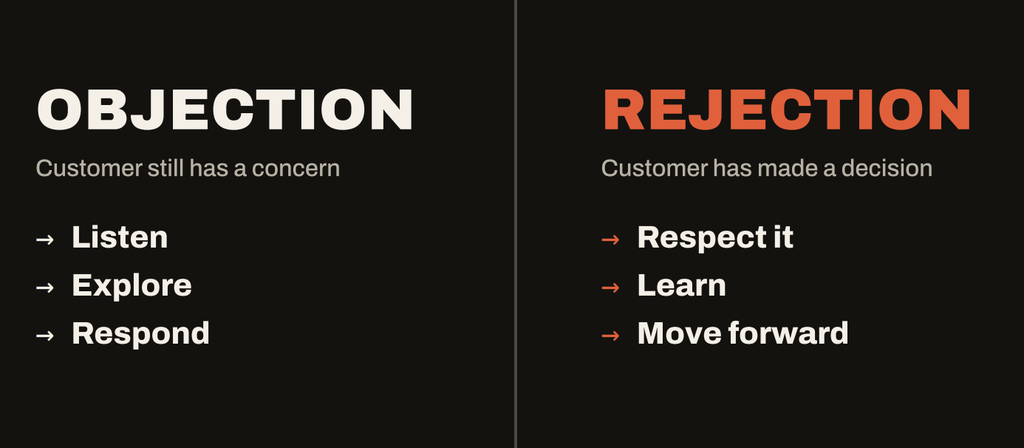
There is another distinction that matters: an objection is not always rejection.
If a customer says, “The price feels too high,” you do not yet know whether they have made a final decision. They may still be trying to understand the offer, compare alternatives or work through uncertainty.
That is an objection, and it can still be explored.
When the customer is expressing a concern rather than making a final decision, frameworks such as the LAER method for handling sales objections can help slow the conversation down. Listen, acknowledge the concern, explore what is behind it and only then respond.
Rejection is different. If the customer has made a clear decision not to move forward, continuing to push can quickly damage the conversation.
Strong salespeople need to recognise the difference. If every objection is treated as final rejection, opportunities are lost too early. If every rejection is treated as an objection that needs to be overcome, the salesperson stops respecting the customer’s decision.
Good judgment is knowing when to explore and when to let go.
There are a few reactions that make rejection harder than it needs to be.
One is immediately blaming the customer. It is easy to decide that they simply did not understand the offer. Sometimes that may be true, but it is worth asking first whether you explained the value clearly enough.
Another is changing your entire approach after one bad conversation. One lost sale is not a trend. If you change your process every time someone says no, you never get enough repetition to understand what actually works.
Overanalysing can be just as unhelpful. There is a point where reviewing the conversation stops creating insight and becomes replaying the same moment repeatedly.
And perhaps most importantly, do not allow frustration from one customer to change the way you treat the next one.
One useful way to look at rejection is as feedback about your skills.
Maybe the conversation showed that you need to become a better listener. Maybe your questions stayed too close to the surface. Maybe your explanation was too complicated. Maybe you reacted too quickly when the customer raised an objection.
Or perhaps your main challenge is emotional resilience rather than sales technique.
This is why improving in sales becomes easier when development is specific. You do not need to become better at everything at once. Look for the skill that repeatedly appears in your conversations and focus there.
Our guide to essential sales skills covers the broader set of abilities that strong salespeople develop over time.
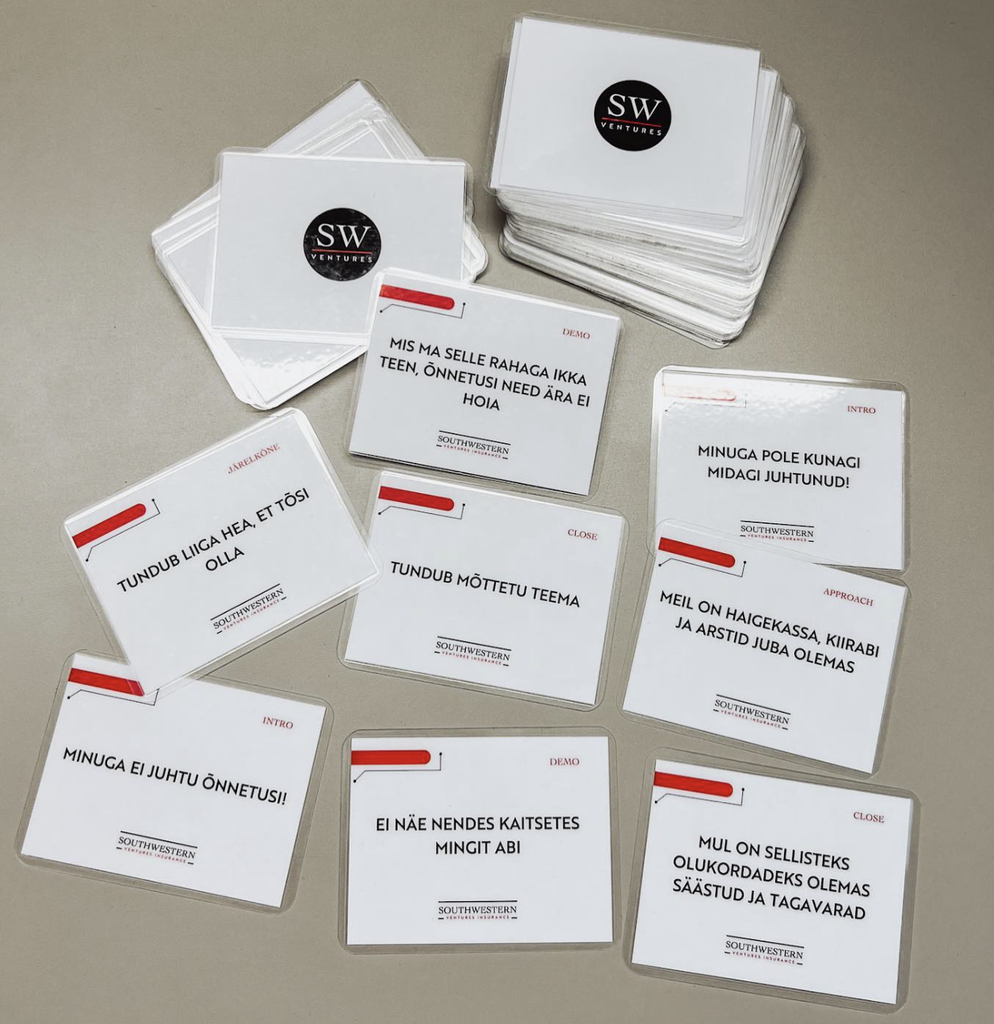
At Southwestern Ventures, rejection is not something we can remove from sales.
Our teams work directly with customers through phone calls, meetings, face-to-face conversations and other forms of active sales. Hearing “no” is part of that environment.
We do not expect people to reach a point where rejection means nothing to them. The more useful goal is helping salespeople learn what to do with it.
Can you look at the conversation objectively? Can you separate what you controlled from what you did not? Can you ask for feedback without becoming defensive? Can you take one useful lesson and then give the next customer the same quality of conversation?
Those are skills that can be trained.
Over hundreds of conversations, the ability to reset becomes just as important as learning how to ask good questions, present a solution or handle an objection.
There is an idea in sales that resilience means developing such a thick skin that rejection eventually stops affecting you.
I do not think that should be the goal.
Caring about the result can be useful. It can make you prepare better, listen more carefully and genuinely want to improve.
The problem begins when one result controls everything that happens afterwards.
Sales resilience means being able to feel disappointed, look honestly at what happened and still return to the next conversation with the same level of professionalism and curiosity.
Take responsibility for what was yours. Let go of what was not. Keep the useful lesson and continue.
You cannot control every answer you receive in sales.
You can control what you do after it.