Why old school sales no longer works and what to do instead

Once, pressure worked.
Fast closing worked.
Campaigns that forced immediate decisions worked.
Today, they don’t.
Not because people have become more difficult customers, but because they have become more informed. Today’s buyer does not need a salesperson to access information. Before the meeting, they have read reviews, compared alternatives, and consulted colleagues. Often, they have already made 70% of the decision before the conversation even begins.
Information is no longer in the hands of the seller.
Control is no longer in the hands of the seller.
And that is exactly what changes the game.
What actually changed?
The shift is not in techniques, but in psychology.
Old school sales was built on speed, arguments, and the ability to overcome objections. Modern sales is built on trust, clarity, and the ability to help a client make a thoughtful decision.
As Alex Hormozi puts it:
“People don’t fear buying. They fear buying wrong.”
When a salesperson responds to that fear with pressure, the client’s defense mechanisms rise. When they respond with clarity and understanding, dialogue begins.
Josh Braun captures it simply:
“When you remove pressure, you increase curiosity.”
Reducing pressure does not mean weakness. It means confidence.
Old mindset vs new mindset
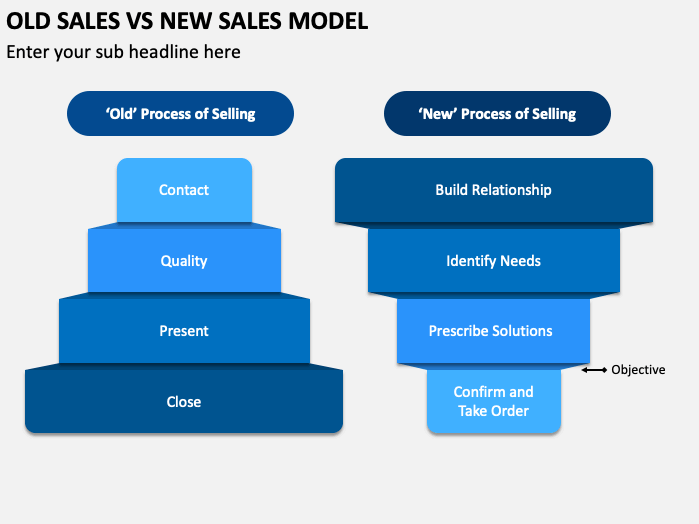
The old approach focused on the outcome: “I need to close.”
The new approach focuses on fit: “I need to understand whether I can help.”
The old salesperson talked a lot and fast.
The new salesperson listens, reflects, and asks.
Long before the digital age, Dale Carnegie wrote that people have a natural desire to feel important and understood. That principle has not disappeared. It has become even more important.
People do not buy only a product.
They buy certainty.
And certainty comes from the quality of the conversation.
Why pressure no longer works
Pressure creates short-term movement, but it does not build long-term trust. A campaign can force a decision, but it does not create loyalty. An aggressive close might win a deal, but it rarely earns referrals.
Today’s customer is sensitive to manipulation. They notice when the conversation moves too quickly toward a solution before the problem has been clearly understood.
When a salesperson introduces the solution too early, the client starts to wonder:
Do they truly understand my situation?
This is where the biggest shift lies.
Sales is no longer persuasion.
Sales is clarity.
What to do instead?
1. Start with permission, not a pitch
At the beginning of a conversation, you do not need to prove your value. It is enough to create a safe framework.
For example:
“I’m not sure whether this topic is even relevant for you. If it’s not, feel free to say so. Would it be okay if I briefly explain why I reached out?”
This approach gives control to the client. And a sense of control reduces resistance.
When a person feels free to say no, they are more willing to listen.
2. Ask questions that make people think
A good salesperson does not rush to the solution. They help the client articulate their situation and its impact.
Questions such as:
“What made you start thinking about this?”
“What happens if this situation stays the same for six months?”
“What makes this decision difficult for you?”
These questions do not pressure. They open.
Chris Voss emphasizes that trust is built when a person feels their perspective is understood. Questions that help clients analyze their thoughts more deeply create exactly that feeling.
3. Make closing a logical continuation
If the conversation has been transparent and meaningful, closing does not feel like selling. It is simply agreeing on the next step.
“Considering everything we’ve discussed, what feels like the most logical next step for you?”
This does not force a decision. It invites collaboration.
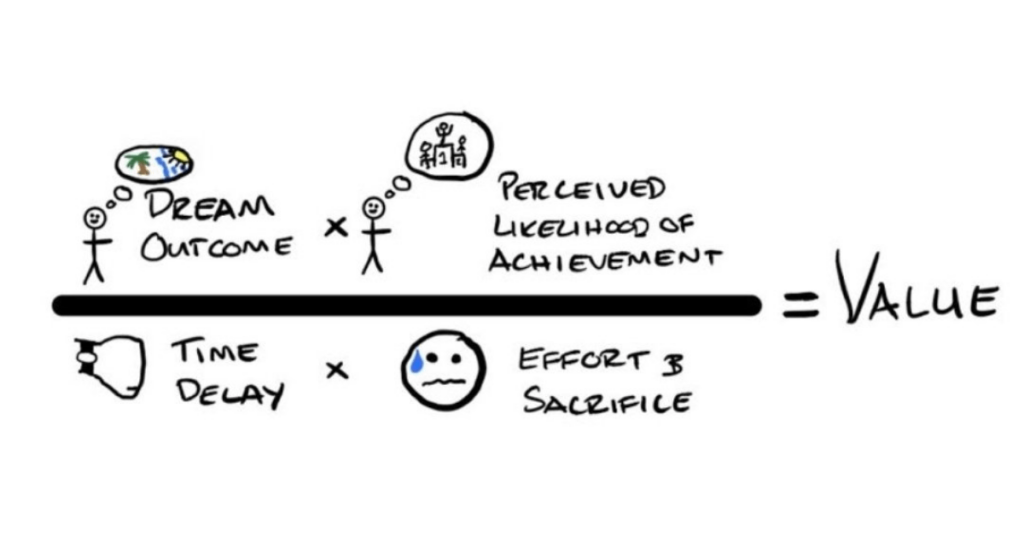
According to Hormozi’s value equation, value increases when the perceived likelihood of success rises and perceived risk decreases. The role of closing is to remove confusion and strengthen clarity, not to create urgency.
Sales as helping
The most important shift is internal.
Sales is not about “talking someone into” a product.
Sales is about helping a person.
Helping means being ready to accept “no” if that is the right decision for the client. It means listening before presenting. It means valuing a long-term relationship more than a quick transaction.
Gary Vaynerchuk often emphasizes the principle “Give, give, give, then ask.” This does not apply only to social media. It applies to all of sales. When you genuinely help, sales happens naturally.
Today’s competitive advantage is honesty. Clarity. Listening. Systematic development.
Clients are not looking for the most aggressive salesperson. They are looking for a partner who helps them make a good decision.
And that is a skill that can be learned, practiced, and systematically developed.
Not through pressure. But through understanding.